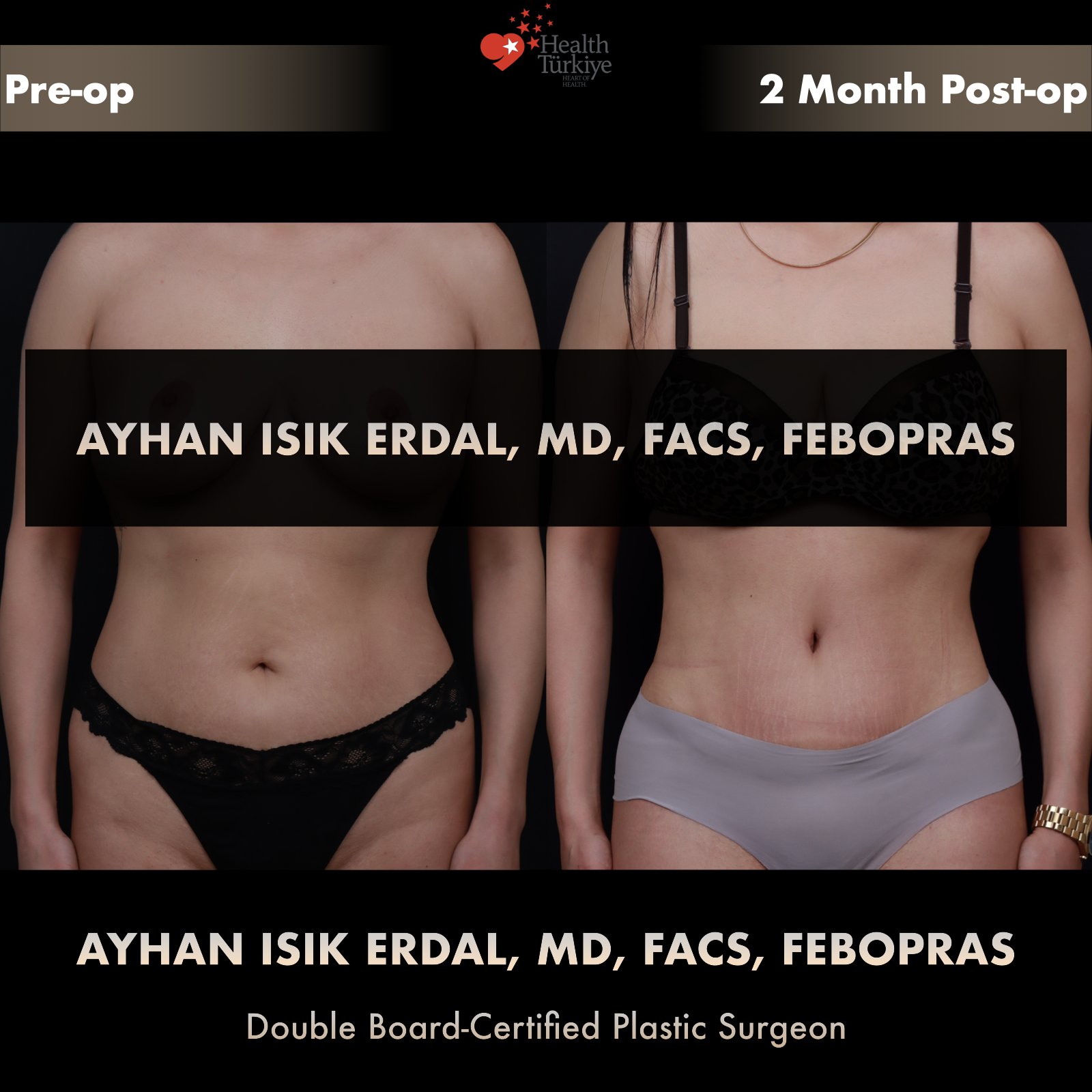
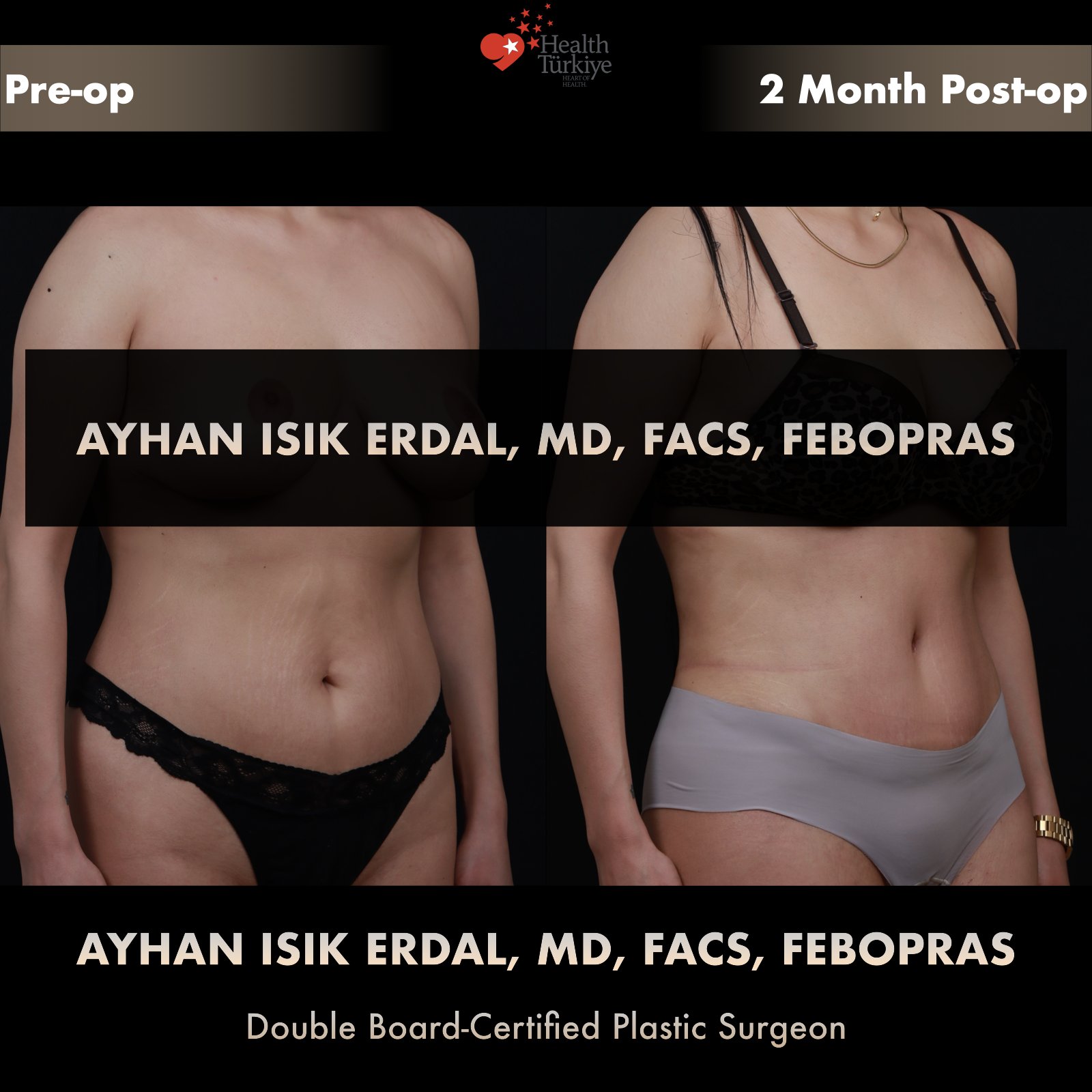
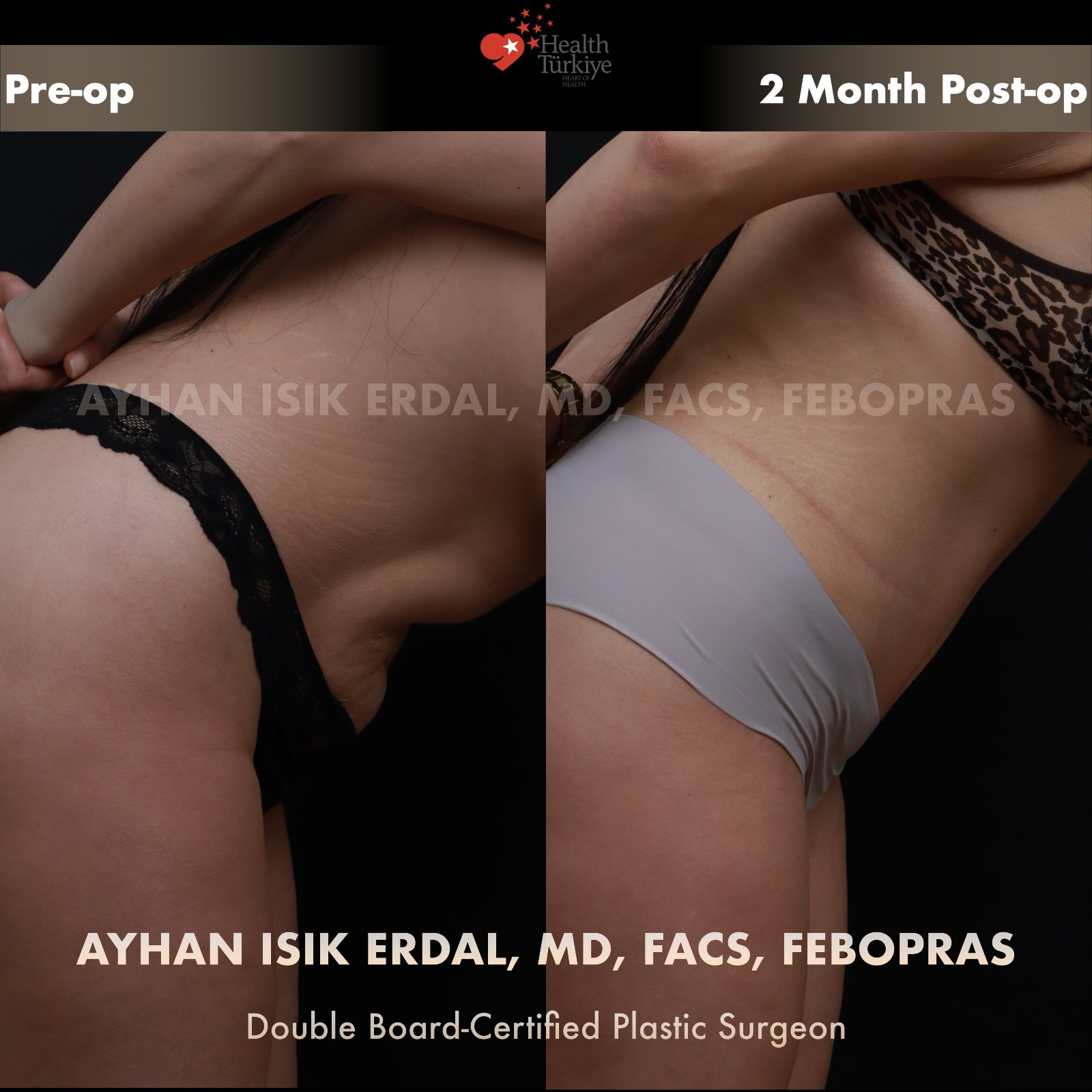
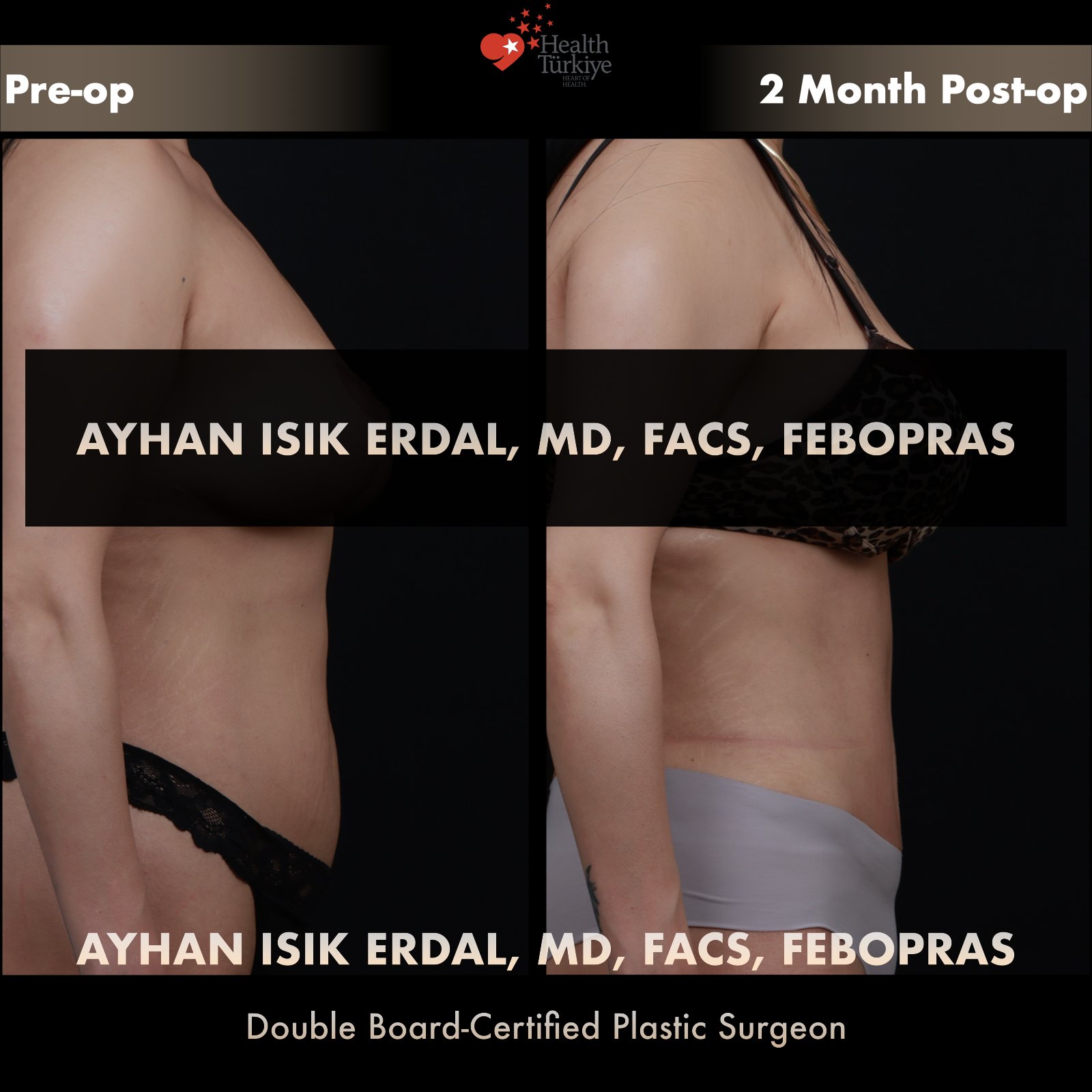
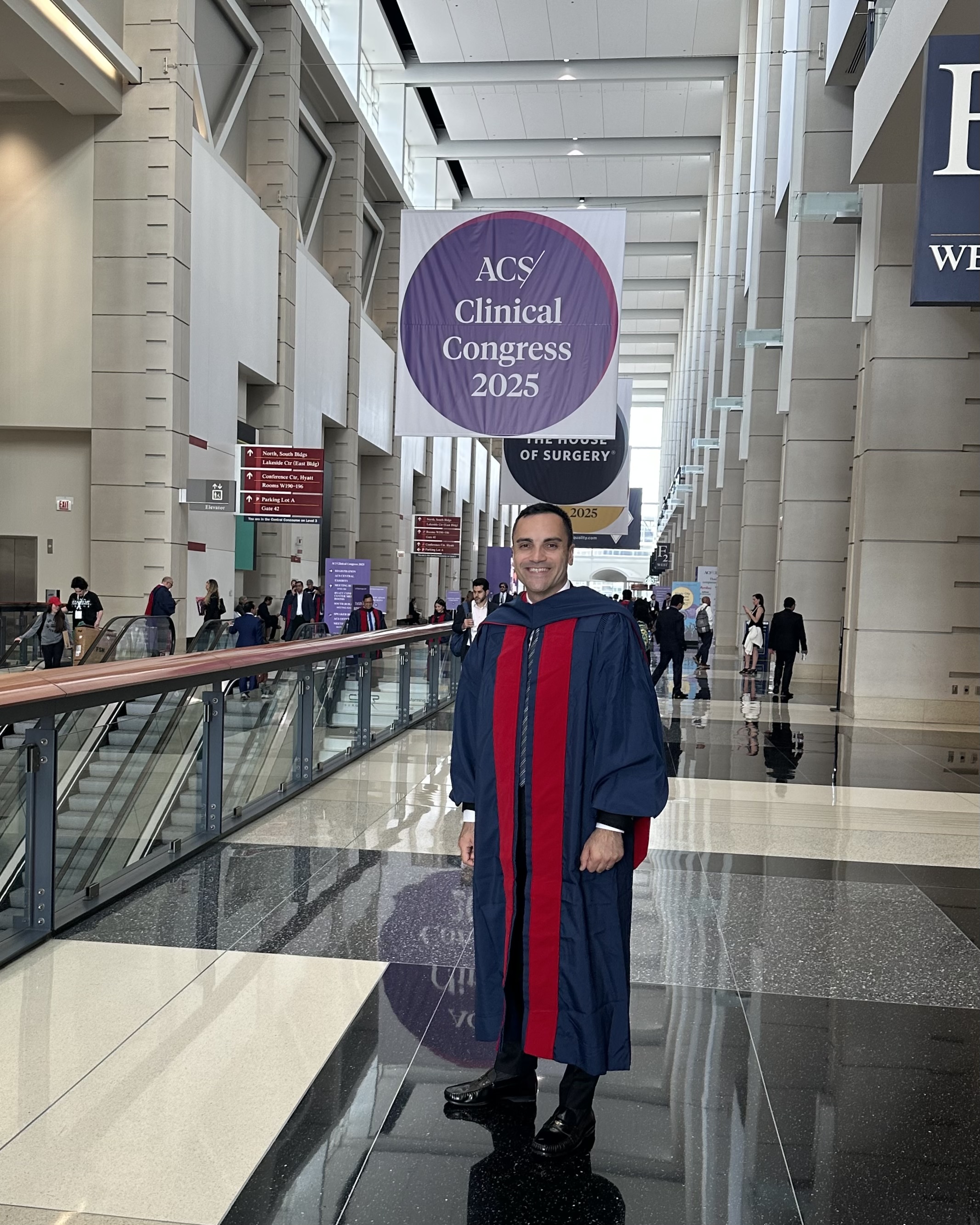
Assoc. Prof. Dr. Ayhan Işık Erdal — double board-certified plastic surgeon, Associate Professor with 30+ peer-reviewed publications and international fellowship training. Extended, fleur-de-lis and lipoabdominoplasty with Scarpa-fascia preservation, perforator-sparing dissection and progressive-tension closure.
Abdominoplasty is not a single operation — it is a spectrum of surgical decisions. The principles below describe the technical commitments Dr. Erdal holds consistent across all abdominoplasty variants, from mini to fleur-de-lis.
Matarasso Type I–IV classification dictates the starting technique; Nahas myo-aponeurotic classification refines the repair plan. The technique fits the anatomy — not the other way around.
In lipoabdominoplasty (Saldanha), the Scarpa fascia is preserved in the lower abdomen to protect the deep inferior epigastric perforators, reducing seroma and preserving flap vascularity when liposuction is added.
Diastasis is repaired in two layers — typically a continuous long-lasting absorbable first layer and a reinforcing second layer — extending from xiphoid to pubis where indicated. Plication is adjusted to the Nahas type.
Pollock progressive-tension sutures obliterate dead space between the flap and the anterior abdominal wall, reducing seroma incidence and offloading tension from the skin closure. In selected cases this eliminates the need for drains.
The low transverse incision is marked with the patient standing, using their preferred underwear / swimwear as reference, ensuring the mature scar sits within the garment line. An existing Pfannenstiel scar is integrated into the incision where anatomically feasible.
The umbilicus is reconstructed with a small vertical-teardrop morphology and discreet peri-umbilical closure — avoiding the over-sized, ring-shaped or obviously sutured appearances that mark a poorly executed abdominoplasty.
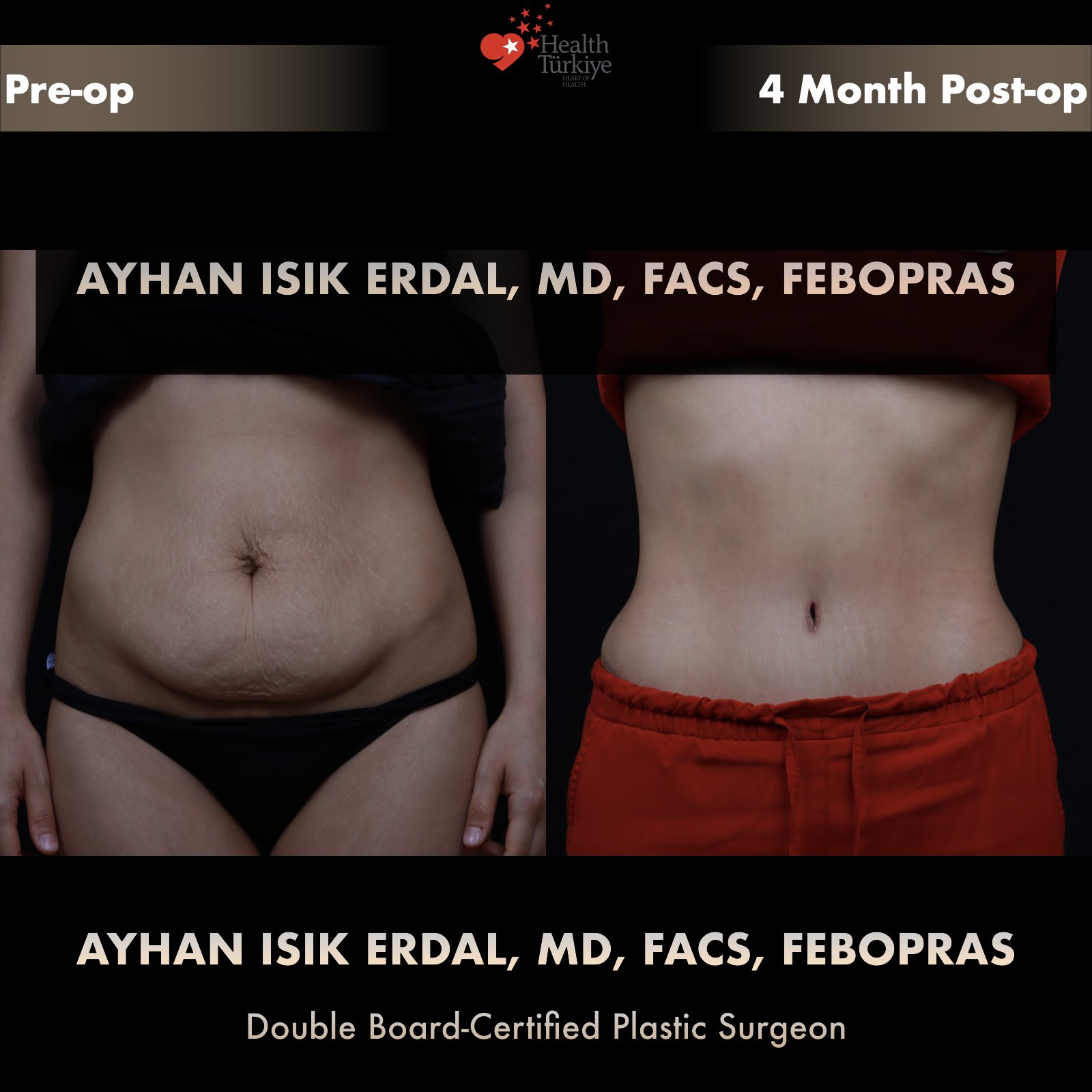
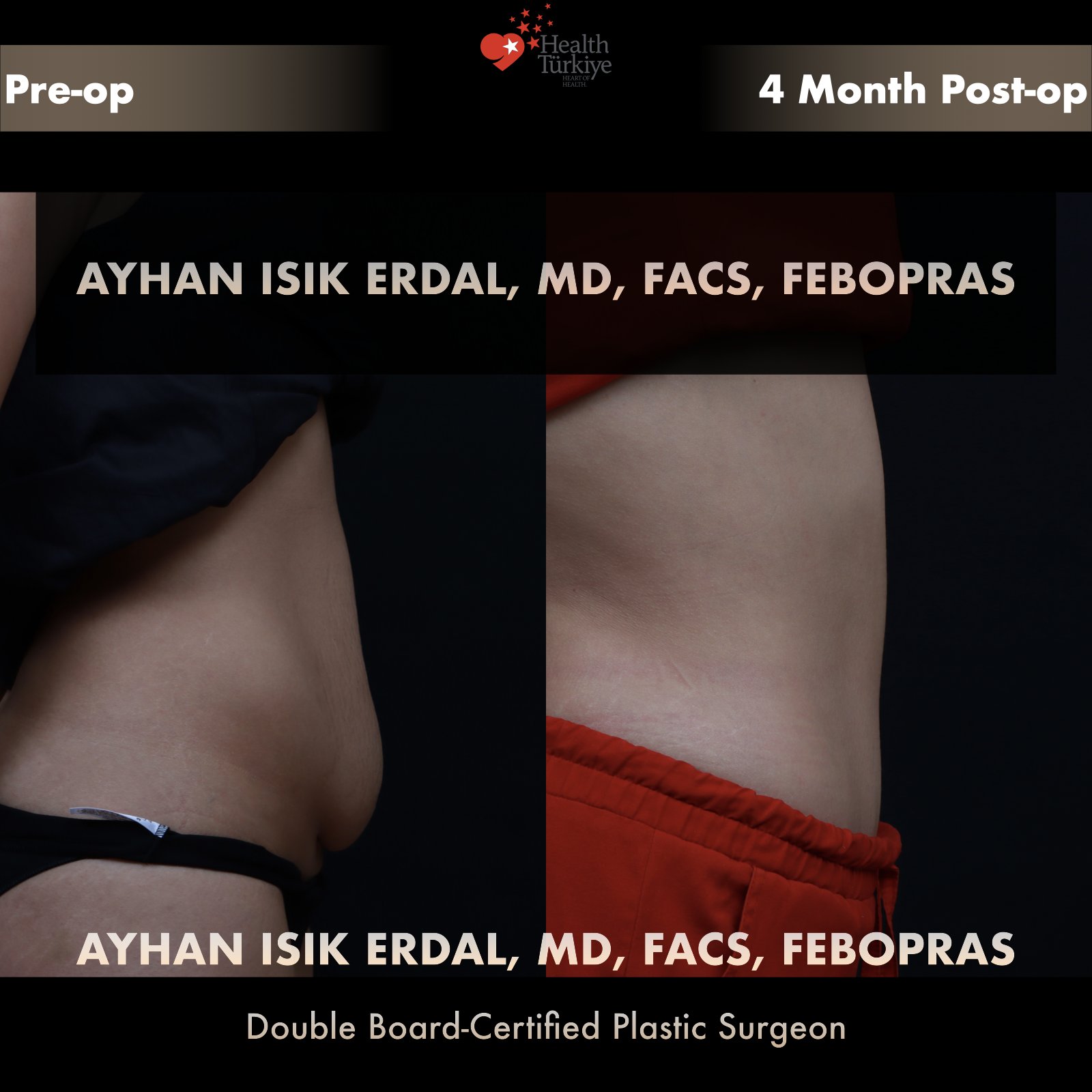
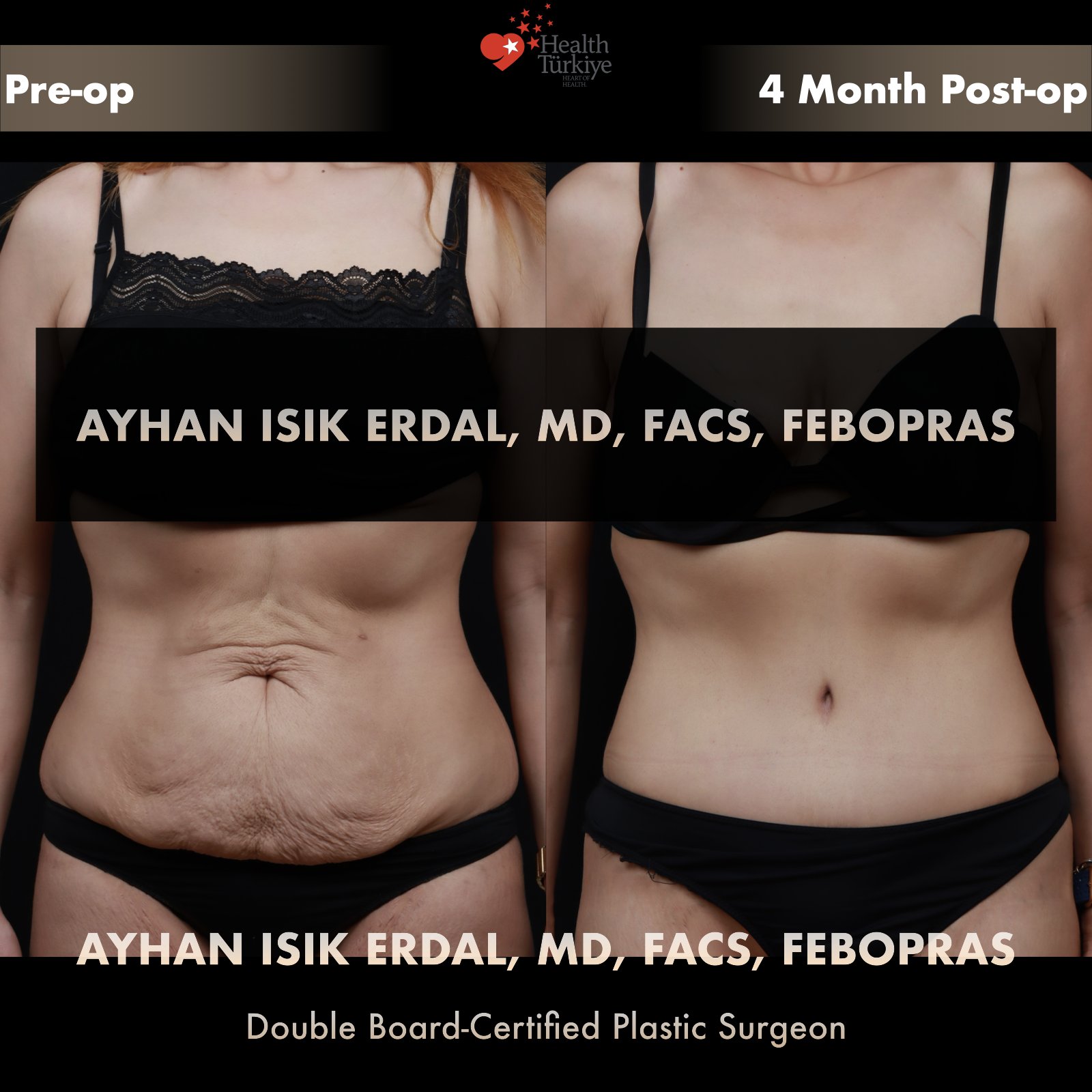
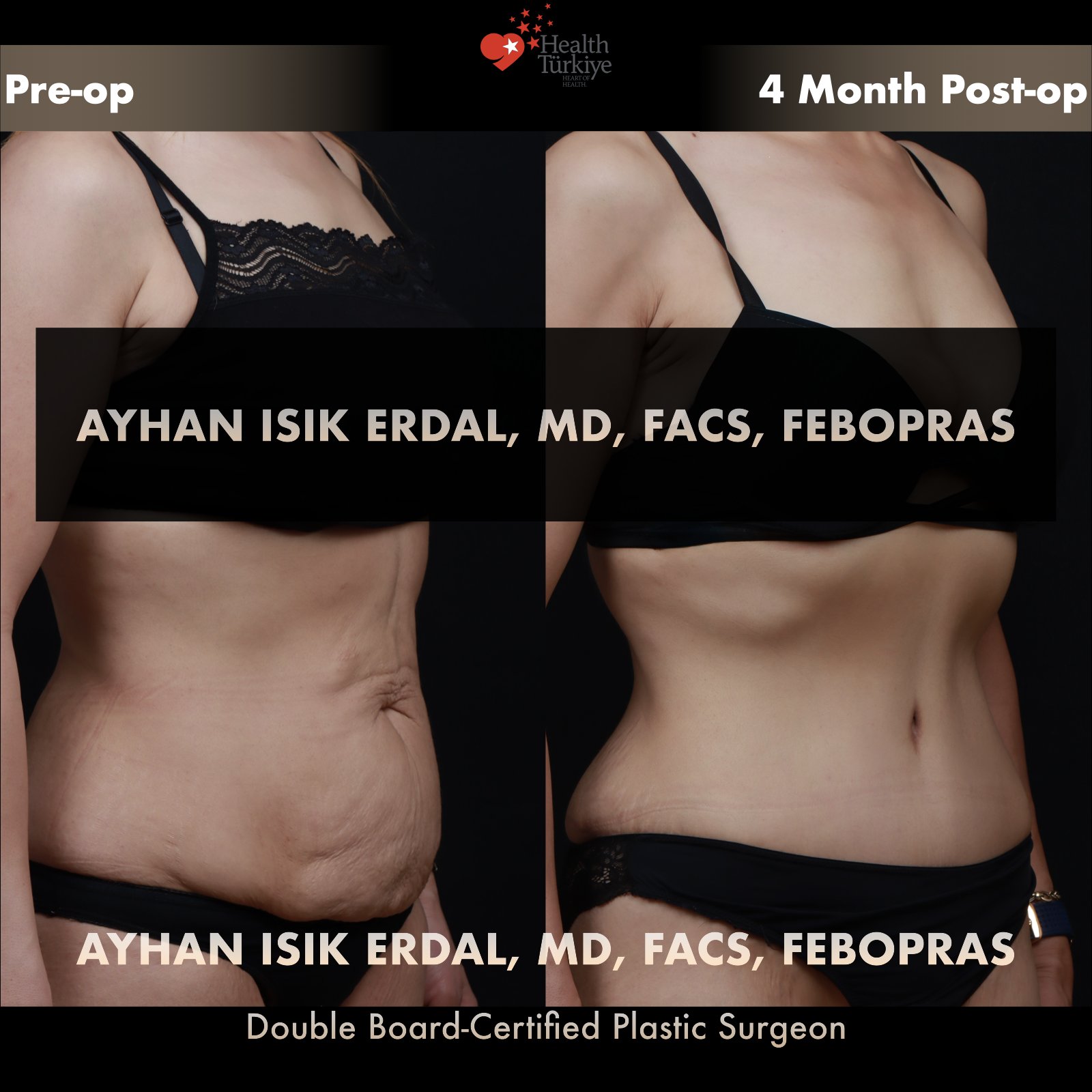
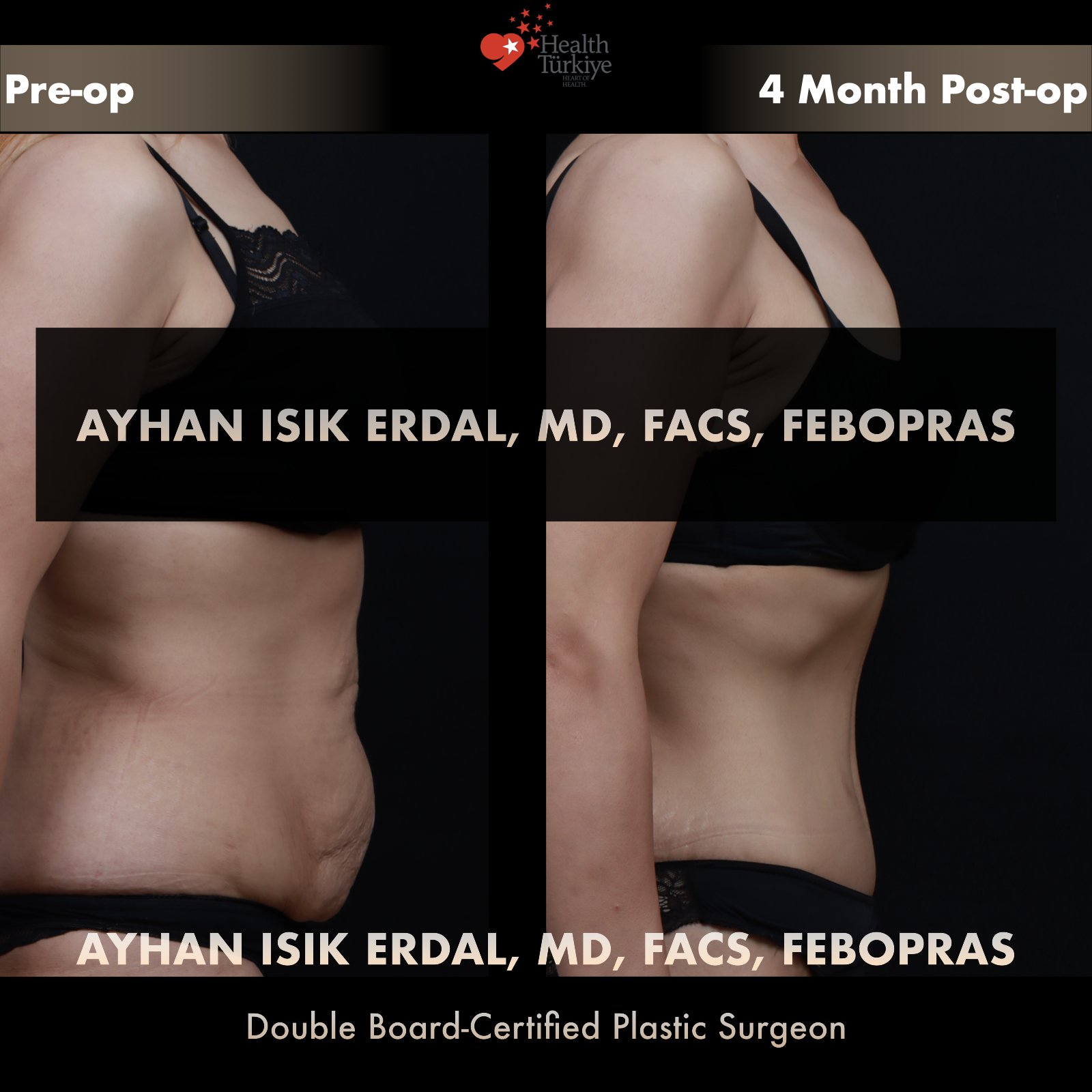
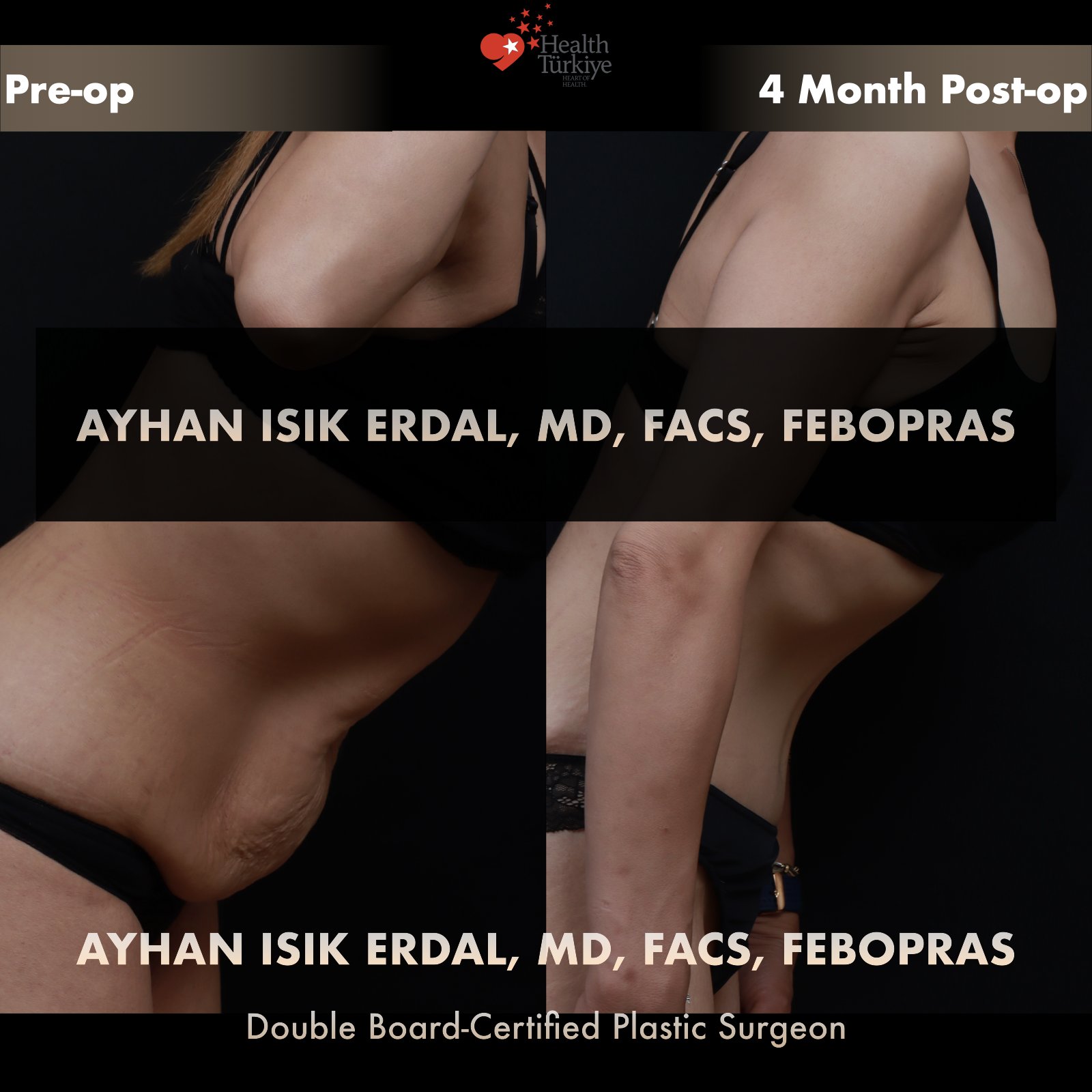
Side-by-side pre-operative and post-operative comparisons at the stated time points. Patient identities are protected; images published with explicit written consent. Tap any image to enlarge.


All photographs published with explicit written consent. Cases performed by Assoc. Prof. Dr. Ayhan Işık Erdal. Additional cases across extended, fleur-de-lis, lipoabdominoplasty and mommy makeover combinations are being added. Individual results vary with Matarasso type, skin quality and tissue response.
Abdominoplasty is a procedure of layered anatomy. Safe, high-quality results depend on respecting the vascular supply of the abdominal skin flap, correctly identifying and repairing the rectus sheath, and placing the final scar in the zone that heals best.
Paired vertical muscles separated by the linea alba. Pregnancy and weight gain stretch the linea alba, producing rectus diastasis. Repair requires plication of the anterior rectus sheath to bring the muscles back to midline.
The transition point where the posterior rectus sheath becomes deficient, approximately midway between umbilicus and pubis. Anatomical landmark for understanding rectus sheath layers during plication and for hernia assessment.
The deep membranous layer of superficial fascia. Preservation in the lower abdomen (Saldanha's lipoabdominoplasty) protects the deep inferior epigastric perforators, maintaining flap vascularity when liposuction is added — the key safety mechanism of lipoabdominoplasty.
The low transverse incision sits between the anterior superior iliac spines (ASIS), within the bikini / Pfannenstiel line. Pre-operative marking with the patient standing ensures the mature scar sits inside the underwear line.
Each technique has a defined indication, scar pattern, muscle-repair component and operative time. The table below summarises the key decision axes used during surgical planning.
| Technique | Indication | Scar | Muscle repair | Umbilicus | OR time |
|---|---|---|---|---|---|
| Mini abdominoplasty | Matarasso Type II — infra-umbilical laxity, minimal diastasis | Short low transverse (≈10–15 cm) | Lower-abdominal plication only if present | Not repositioned | 2–3 h |
| Standard abdominoplasty | Matarasso Type III–IV — classic post-pregnancy presentation | Hip-to-hip low transverse | Full xiphoid-to-pubis two-layer plication | Repositioned (neoumbilicoplasty) | 3–4 h |
| Lipoabdominoplasty (Saldanha) | Type III–IV with waist / flank adiposity | Hip-to-hip, often slightly shorter than standard | Plication with Scarpa fascia preservation | Repositioned | 4–5 h |
| Extended abdominoplasty | Type IV with flank laxity, post-MWL ≈20–40 kg | Extended laterally beyond ASIS | Full plication + flank liposuction | Repositioned | 4–5 h |
| Fleur-de-lis abdominoplasty | Massive weight loss (>40 kg) with vertical skin excess | Horizontal + vertical midline (T-shaped) | Full plication; vertical wedge excision | Repositioned | 4–5 h |
| Circumferential abdominoplasty (belt lipectomy) | Post-bariatric with circumferential redundancy | Full circumferential | Full plication ± lateral thigh advancement | Repositioned | 5–7 h |
Operative times are for standalone procedures. Combined procedures (mommy makeover: abdominoplasty + breast surgery) add their component time. Fleur-de-lis and circumferential procedures carry higher complication rates and are reserved for patients where the result justifies the scar complexity and risk profile.
Abdominoplasty planning uses overlapping classification systems to capture different dimensions of the deformity. The three systems below are used together — not in isolation — to match the operation to the patient.
Abdominoplasty is a major operation with a real, quantifiable complication profile. The figures below are from the international literature for contemporary practice with modern techniques. Patient selection and technique choice modify these rates significantly.
The most common complication. Modern technique — Scarpa fascia preservation, progressive-tension sutures, quilting — reduces the historical rate of 10–20% to ~3–5%. Most respond to aspiration; rare cases require delayed re-operation.
Uncommon with meticulous intra-operative haemostasis. Presents within 24–48 hours as unilateral swelling, tension and pain. Requires early return to theatre for evacuation and haemostasis.
Abdominoplasty carries one of the highest VTE rates among aesthetic procedures. Caprini-score stratification guides prophylaxis: graduated stockings + intermittent pneumatic compression intra-op for all; chemical prophylaxis added for elevated scores.
Most commonly at the T-junction (fleur-de-lis) or at the flap tension point. Strongly associated with smoking (the single largest modifiable risk), BMI >30, and diabetes. Usually responds to conservative dressings; large dehiscences are rare.
Uncommon in contemporary practice with perforator-aware dissection. Risk factors: aggressive undermining, prior subcostal incisions disrupting perforators, smoking, tension at closure. Saldanha's technique significantly reduces this risk when liposuction is combined.
Scar widening, small areas of persistent laxity, or unilateral dog-ear at the incision ends. Addressed under local anaesthesia in clinic when the primary scar has matured (≥12 months).
Figures reflect aggregated international literature for contemporary abdominoplasty with modern technique. Dr. Erdal's personal case series results are discussed at consultation and audited against these benchmarks.
The single biggest predictor of a smooth abdominoplasty recovery is the state the patient arrives in. The variables below are reviewed in detail at consultation and, where needed, a prehabilitation plan is agreed before a surgery date is offered.
Stable for 3+ months within 2 kg. Operating on a still-changing body produces a result designed for the wrong anatomy. BMI <30 is preferred; BMI 30–32 is accepted with careful counselling; BMI >35 is typically deferred pending further weight management.
Minimum 4 weeks pre-op, 4 weeks post-op — ideally longer. Smoking is the single largest modifiable risk factor for flap necrosis, wound dehiscence and delayed healing. Nicotine replacement therapy is also discouraged during the peri-operative window.
Adequate protein intake (1.2–1.5 g/kg/day) in the pre- and post-operative window. Iron studies and vitamin D are checked in pre-operative bloods; deficiencies addressed before surgery. Post-bariatric patients need particular attention to micronutrient status.
Caprini score is calculated for every patient. Elevated scores (oral contraceptives, prior VTE, thrombophilia, high BMI) trigger chemical prophylaxis protocols with low-molecular-weight heparin, in addition to standard graduated stockings and intermittent pneumatic compression.
Diabetes should be well controlled (HbA1c <7%). Hypertension must be stable. Thyroid function normalised. Autoimmune conditions and chronic corticosteroid use require case-by-case evaluation. Prior abdominal surgery is reviewed for potential vascular implications.
A subsequent pregnancy is physically possible but will stretch the repaired abdominal wall and undo most of the muscle plication. Abdominoplasty is therefore advised only once family planning is complete. A revision is possible after any future pregnancy.
Assoc. Prof. Dr. Ayhan Işık Erdal
MD, FACS, FEBOPRAS · Plastic, Reconstructive & Aesthetic Surgery
"Technique matters. The difference between an acceptable abdominoplasty and an excellent one is not the hospital, not the package — it is the surgical decisions made from Matarasso type through Scarpa preservation to the final suture."
— Assoc. Prof. Dr. Ayhan Işık ErdalDr. Erdal is an active academic plastic surgeon whose research output spans aesthetic surgery, reconstructive surgery and plastic surgery education. Selected journals where his work has appeared:
Full publication list available on request. Academic practice is a core part of Dr. Erdal's clinical identity — research and clinical technique inform each other.
prolene); a reinforcing second layer is added above. Extent runs from xiphoid to pubis when the diastasis does. The Nahas type directs whether plication alone is sufficient or whether additional oblique aponeurosis advancement is required.Extended reading on the surgical techniques used in abdominoplasty practice, written at a level appropriate for patients with a clinical background — or for any patient who prefers detail.
Looking for a patient-friendly overview of the same topics, written without clinical terminology? Visit tummytuckinturkey.com — Dr. Erdal's medical-tourism-oriented sister site.
International patients receive VIP airport transfer, coordinated accommodation at Antwell Suites (ground-floor clinic for daily follow-ups), pre-operative hospital work-up, 1–2 night hospital stay, compression garment and drains, and full follow-up through to return home.
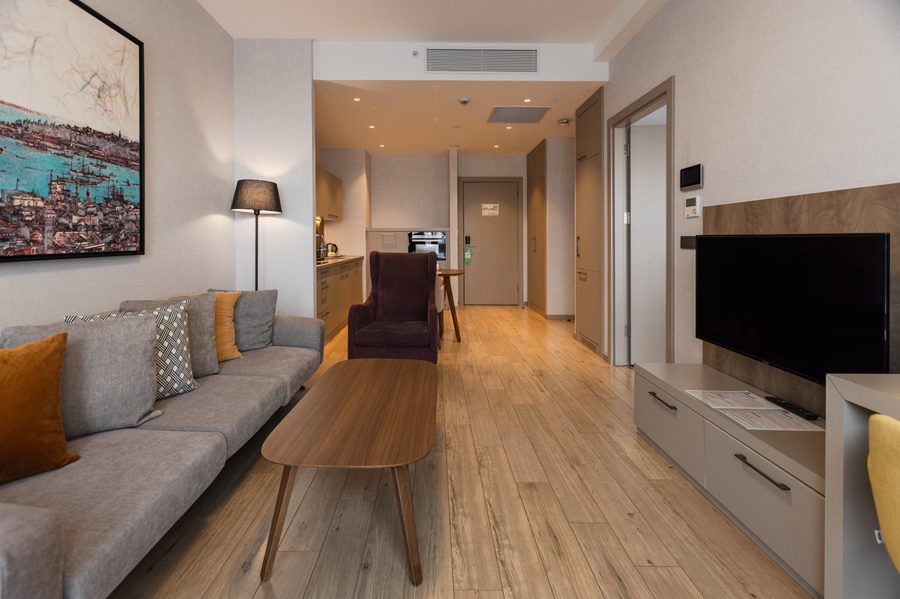
Recovery-friendly 1+1 suites with full kitchen, separate bedroom and large walk-in bathroom — situated above a ground-floor clinic where Dr. Erdal's team conducts daily post-operative checks during the critical first week, minimising travel when mobility is limited.
Standard length of stay for abdominoplasty is 7–10 days. Lipoabdominoplasty and mommy makeover sit at the longer end of this range. Companions welcome at no additional charge.
Two short messages from Dr. Erdal — a welcome and practical tips for planning your journey to Istanbul.
Dr. Erdal personally reviews every international case. Please include standing photographs (frontal, both obliques, lateral), height and weight, pregnancy and weight-change history, and any previous abdominal surgery. Response within 24 hours.
All information kept strictly confidential. International consultations conducted in English.
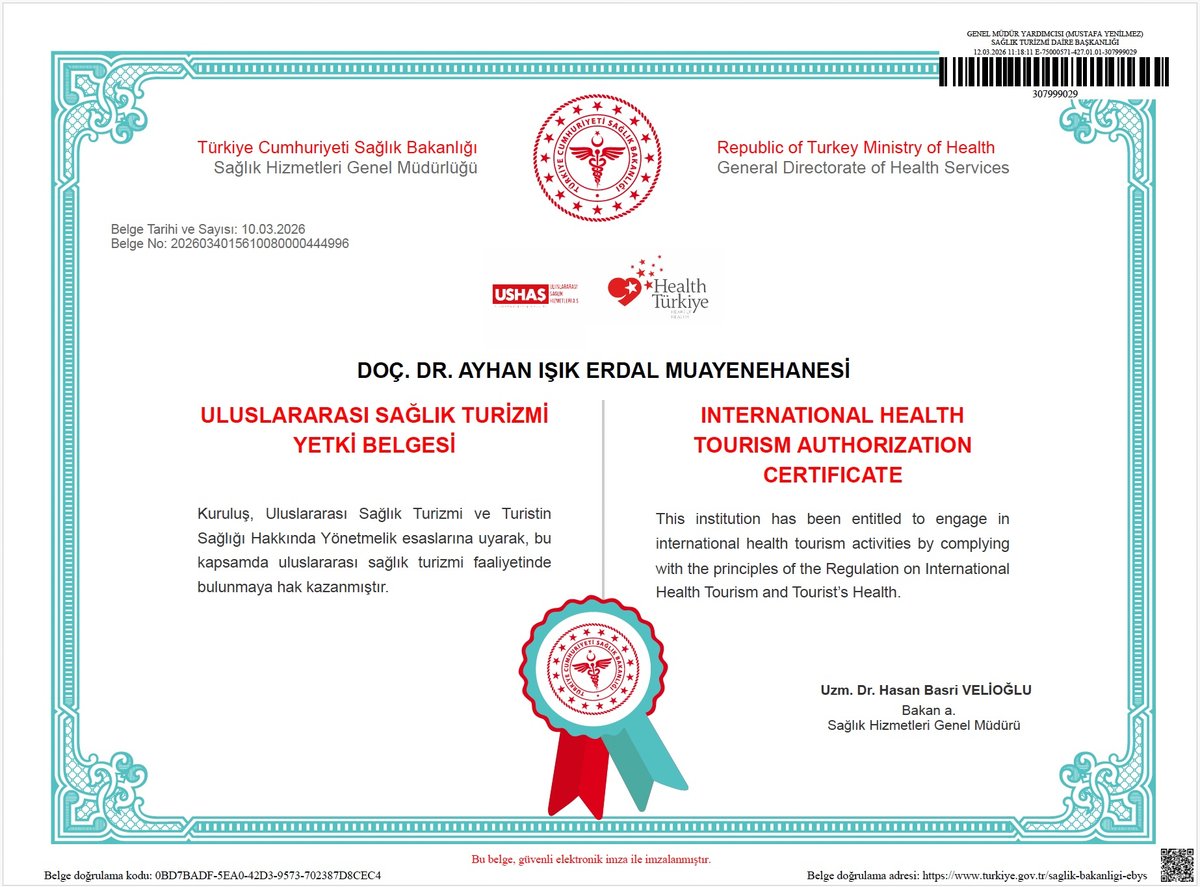
Dr. Erdal's clinic holds the Republic of Turkey Ministry of Health International Health Tourism Authorization — the legal requirement for treating international patients in Turkey. This is the baseline regulatory check; any clinic treating international patients without this authorization is operating outside the law.
Certificate No: 2026034015610080000444996 · Issued: 10.03.2026 · Republic of Turkey Ministry of Health, General Directorate of Health Services